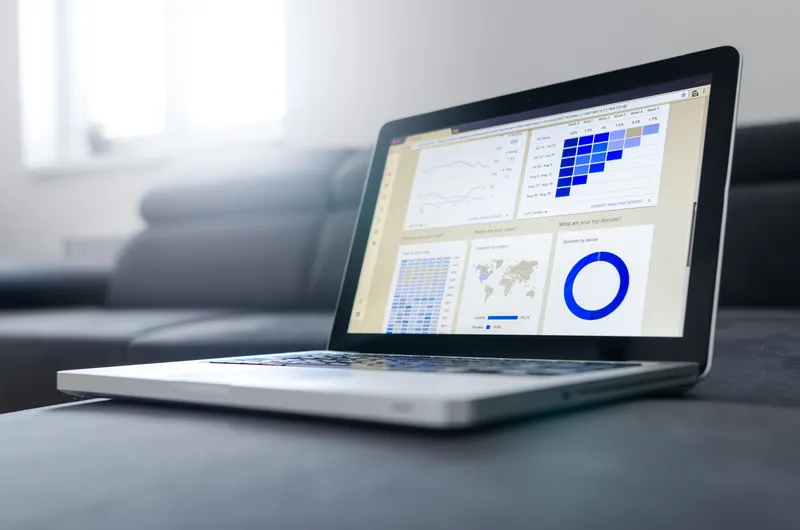
Most small businesses have the data. Revenue numbers in QuickBooks. Sales activity in a CRM somebody set up two years ago and updates inconsistently. Operations tracked in a spreadsheet that one person built and nobody else understands. The data exists. What's missing is something to connect it — and someone who can translate what the connected picture actually means for a specific decision.
That is what data analytics companies do at their best. And working with the right one is the difference between making decisions on gut feel and making decisions based on what the numbers actually say. For a lot of companies doing $1 million to $10 million in revenue, that difference shows up in the decisions that don't get made wrong — the hire that doesn't happen, the customer segment that doesn't get abandoned, the cash crunch that gets seen three weeks early instead of discovered on a Friday afternoon.
I've spent years as a fractional CFO working inside companies across construction, real estate, e-commerce, telehealth, and professional services. In my experience, most of them don't have a data problem. They have a data-sitting-in-the-wrong-place problem.
What Data Analytics Companies Actually Do
A data analytics company's job is not to generate reports. It is to change decisions.
That sounds obvious until you audit what most companies are actually buying. I see it regularly — a business that has purchased a business intelligence platform, built a few dashboards, and then those dashboards sit on a screen in the conference room that nobody looks at between quarterly reviews. The data is updated. The charts are accurate. Nothing about how the company operates has changed.
That is a reporting tool, not analytics. And the gap between those two things is where most vendor pitches fall apart.
A legitimate data analytics company — whether it is a consulting firm, a software platform, or a combination of both — bridges the distance between raw data and a specific business decision. What that looks like in practice:
- Centralising data from multiple sources: your accounting software, CRM, operations tools, marketing platforms, and payroll system
- Identifying patterns across that data — which customers are most profitable, which processes are bleeding margin, where cash is getting stuck
- Presenting findings in a format a non-data-scientist business owner can act on without needing a translator
- Building forecasts that tell you what is likely to happen next, not just what happened last quarter
The measure of whether an analytics company is doing its job is simple: are the decisions you make on Monday morning different because of what the data showed you on Friday? If yes, you have analytics. If not, you have reporting with better graphics.
Why Small Businesses Outsource Analytics Instead of Building In-House
A commercial landscaping company I worked with was debating whether to bring on a full-time Sales Manager. The owner was convinced the business needed more top-of-funnel activity — more bids, more contracts, more revenue coming in.
When we pulled the financial picture together, it told a different story. The problem wasn't just sales velocity. It was cash flow timing. The company was overleveraged, and over the previous year had drifted away from the core service offerings that carried the strongest margins — chasing contract types that looked like revenue but weren't covering operational costs on time.
The data changed the framing entirely. A Sales Manager wasn't wrong — but putting one into a business with a structural cash flow problem and an unfocused service mix would have produced more revenue stress, not less.
So we addressed it in order: identified which services were actually profitable, restructured how they were prioritised, got the cash timing under control — and then brought on the Sales Manager with a clear lane to run in.
That is what analytics-informed decision-making looks like in a small business. The data didn't tell him not to hire. It told him what order to do things in. And here is the reality: most companies at that size cannot build that capability in-house. You would need a data engineer to connect your systems, a data analyst to interpret what comes out, and a business intelligence developer to build dashboards that are actually usable. Three different skill sets. In a 15 or 20-person business, hiring all three is not realistic. Outsourcing — whether to a platform or a firm — is the only practical path.
According to research published by Vena Solutions, 41% of business leaders say they are not drawing on their own organizational data when making decisions. That number would be lower if the data were accessible. The issue is that most small businesses have their data locked in silos — accounting in one system, CRM in another, payroll somewhere else. Bringing that together is exactly what data analytics companies exist to do. I wrote about this same pattern in the context of financial operations — the same disconnection problem, applied to how businesses track costs and margin.
How to Evaluate a Data Analytics Partner
Not all data analytics companies are built for businesses your size. I want to be direct about this because most people in the industry soften it. Buying enterprise-grade infrastructure before you have enterprise-grade data volume is a waste of money, not a competitive advantage. If a vendor's onboarding guide is 47 pages and requires a dedicated administrator to configure, that company built an enterprise product and is now selling it down-market with a different price sticker. That is not the same thing as building something for you.
Here are the five criteria that actually matter when evaluating a data analytics company for a small business:
| Criteria | What good looks like | Red flag |
|---|---|---|
| Time to first insight | You see real, your-data dashboards within 7–14 days | Quoted a 6-week onboarding timeline |
| Data source compatibility | Connects to your existing tools without custom development | "We'll need to build a custom connector for that" |
| Pricing structure | Flat-rate or per-seat pricing with no hidden implementation fees | "Implementation is billed separately" |
| Financial data integration | Pulls from your accounting system, not just marketing and CRM | Only integrates with top-of-funnel data sources |
| Action-oriented output | Delivers recommendations alongside charts | Reports look impressive but never suggest what to do differently |
The most important of these is time to first insight. If a vendor can show you your own data in a meaningful format within two weeks, that is proof the platform was designed for adoption. If they are still "configuring your environment" three weeks after you signed, you are now in an implementation project — and implementation projects kill analytics initiatives at small companies because there is nobody available to babysit them.
The financial data integration row matters more than most vendors acknowledge. I will address this gap in detail in the next section, because it is where the majority of small businesses get shortchanged.
Cashflow Optimizer connects financial reporting, CRM, AR management, and operations in one platform — built specifically for small businesses. Start a free 14-day trial with no credit card required.
Start your free trial →Top Data Analytics Companies for Small Business in 2026
This category spans self-service BI tools you can run yourself to full-service consulting firms with dedicated analyst teams. What you need depends on your technical capacity, the complexity of your data environment, and whether you want software or a managed service.
Self-Service Business Intelligence Tools
Microsoft Power BI The most accessible BI tool on the market for small businesses already inside the Microsoft 365 ecosystem. Power BI connects to Excel, SharePoint, Dynamics, and hundreds of third-party apps. The free version handles most SMB reporting use cases. Paid plans start at $10 per user per month.
Keep in mind: you need at least one person internally who can build and maintain reports. Power BI is not plug-and-play — it rewards investment in learning the tool. If nobody on your team is comfortable in the data layer, the platform will collect dust.
Google Looker Studio (formerly Data Studio) Free, browser-based, and genuinely capable for marketing and CRM analytics. Connects natively to Google Analytics, Google Ads, and Google Workspace tools. Best for businesses where a meaningful portion of their data already lives in the Google ecosystem.
Limitation: not designed for financial data. You can connect it to QuickBooks via third-party connectors, but the result is inconsistent and not built for accounting oversight.
Tableau The industry standard for data visualisation. Tableau handles complex, multi-source datasets better than almost anything else, and the dashboards are genuinely well-designed. Creator plans start at $75 per user per month.
Limitation: cost and complexity scale quickly. For a 12-person business, this is almost certainly more platform than you need, and you will spend more time managing it than acting on what it shows you.
Full-Service Analytics Platforms
Domo A cloud-native BI platform designed for executives who want dashboards instead of spreadsheets. Domo connects to over 1,000 data sources and surfaces information through executive-level summaries. Strong for companies with large data volumes across multiple departments.
Limitation: pricing is opaque and typically involves enterprise-level contract negotiations. Not built or priced for businesses under $5 million in revenue.
Sisense An AI-powered analytics platform with strong financial and operational data capabilities. Sisense is designed for embedded analytics — meaning you can build analytics into other tools your team already uses. Good for businesses that want analytics to live inside existing workflows rather than in a separate app.
Limitation: steep learning curve and enterprise pricing. Likely overkill for most small businesses that need clean, operational visibility rather than embedded analytics infrastructure.
Financial Analytics (Where Most BI Tools Fall Short)
Cashflow Optimizer I built this, and I will be straight with you about that. But I would be doing you a disservice if I left it off this list, because it addresses the specific problem that most data analytics companies do not touch: the financial intelligence layer.
Cashflow Optimizer is a business operations platform with a data analytics module built specifically for SMBs — connecting CRM data, financial reporting, AR management, project management, and HR in a single environment. The analytics layer is designed to surface decisions, not just metrics: when to hire, which customers to focus on, how margin varies by project type, and what is happening to cash flow before it becomes a problem.
Plans start at $99/month for the Starter tier. The Growth plan — which covers most businesses with up to five users — is $299/month. The 14-day free trial requires no credit card. You can learn more at Cashflow Optimizer.
Data Analytics Consulting Firms
If your situation is complex enough that software alone will not solve it — multiple business units, legacy data systems, or a specific analytics engagement with a defined scope — a boutique analytics consulting firm may be worth the investment. Firms like IronSide, Decisive Data, and Slalom work with mid-market and SMB clients and build custom solutions for specific business questions.
Expect to budget $5,000–$25,000 for a defined project engagement. Ongoing retainers typically run $3,000–$10,000 per month.
The Financial Intelligence Gap Most Analytics Vendors Ignore
Most business intelligence platforms are designed for enterprise companies and then relabelled as SMB-friendly once someone lowers the price tier. You can tell because the out-of-the-box dashboards show marketing attribution, sales pipeline velocity, and product usage metrics. Not one of them shows you your payroll coverage ratio. Not one of them tells you how many weeks of operating cash your current AR balance gives you. Not one of them flags that your 90-day receivables have grown 40% over the past quarter.
That is a serious gap. For a business doing $2 million to $8 million in revenue, those financial signals are the ones that determine whether you survive a slow quarter — not your email click-through rate.
The Vena Solutions research I cited earlier draws the same conclusion: businesses that integrate data across systems make faster operational decisions and catch problems earlier. But that integration only works if financial data is part of the picture. AR data without P&L context is just a collections list. P&L without cash flow visibility is just historical accounting. The insight comes when you can see the three together, updated in real time, connected to the decisions that move the business. If you want a deeper look at why financial reporting visibility matters specifically, the large language models and financial reporting oversight post covers what happens when AI tools get access to that connected layer.
My friend, if you are evaluating data analytics companies and none of them are asking you questions about your receivables aging, your payroll runway, or your cash-to-revenue ratio — that tells you something important about whose problems they were designed to solve. And it probably is not yours.
I built the financial analytics module in Cashflow Optimizer specifically to close this gap. Not because the other platforms do not serve their purpose — Power BI is genuinely excellent at what it does — but because no platform was connecting financial analytics to business operations in a way that a 15-person company could use without an IT department managing it. Businesses using the Cashflow Optimizer financial reporting module catch budget overruns an average of 2.4 weeks earlier than businesses using manual methods. That is not a feature. That is a different category of financial control entirely.
Red Flags to Watch Before You Sign
I have watched business owners lose six months and real money on analytics implementations that went nowhere. Here are the signals I look for before recommending a commitment:
"We'll send you to our implementation partner." This phrase means the product is not finished. A platform that requires a third-party firm to configure was not built for your team to operate. Implementation partners make sense for enterprise ERP systems that cost $500,000 to install. They do not make sense for a business intelligence tool your marketing coordinator is supposed to use on Tuesday morning.
No published pricing. If you have to speak with a sales representative before you can see a price, the price is a negotiation — and in that negotiation, you are the less-informed party. Every platform worth using for a small business publishes its pricing publicly. Ours does. The ones that do not are making a deliberate choice.
Dashboards with no recommended actions. A vendor demo that shows you beautiful visualisations but never answers "what should I do differently next week based on this data?" is showing you reporting, not analytics. Ask that question explicitly during the sales process. Watch what happens.
Onboarding timelines longer than 30 days. For a company with under 50 employees, a 30-day onboarding is already long. If a vendor quotes six to eight weeks before you will see live data, you are looking at a platform that was not built for small teams. Every week of onboarding is a week you are making decisions without better information.
And one more: if the vendor cannot demo the product using your industry as context — if they show you a generic dashboard and refuse to connect any real data during your trial — walk away. A company that cannot prove value before you sign will not deliver it after.
When You Don't Need a Data Analytics Company Yet
You probably do not need a data analytics company yet if any of the following applies.
- Your data is too inconsistent to analyse. If the same customer is listed three different ways across your CRM, invoicing system, and spreadsheet, no analytics platform will fix that. Clean the data first. Garbage in, garbage out — and no visualisation changes that math.
- You are pre-revenue or have fewer than six months of transaction history. Analytics finds patterns. A business with three months of data does not have patterns worth finding yet. It needs more customers and consistent bookkeeping. Come back when the foundation is solid.
- Your primary constraint is sales, not information. If the business is struggling because you do not have enough leads, no analytics platform will fix a pipeline problem. Fix the pipeline first. When you have meaningful revenue coming in and the patterns start repeating, that is when data analytics companies earn their fee.
"The cheapest tool is not the cheapest option" is something I genuinely believe — 9+ hours of weekly admin time across disconnected apps costs far more than any reasonable platform subscription. But no software is better than the wrong software at the wrong moment. I would rather you wait six months and start when the fit is right than watch you spend twelve months and thousands of dollars on a platform that did not match where you actually were.
That is for you to determine. What I can tell you is that when the data is clean, the patterns are there, and you can see your revenue, your cash, and your operations in one place — you will wonder how you made decisions without it. If you want a starting point for what that financial visibility looks like in practice, the accounting automation post covers the foundational layer worth building first.
Most businesses I work with hit the right moment for analytics sooner than they expect. And when they do, the first question is always: where was all of this before?
FAQ
What does a data analytics company do?
A data analytics company collects data from multiple sources — your CRM, accounting software, marketing platforms, and operations tools — and transforms it into insights that drive decisions. The best ones do not just produce charts; they identify what the numbers mean for a specific business decision: which customers to prioritise, where margin is leaking, and how the next quarter is likely to shape up based on current trends.
How much does it cost to hire a data analytics company?
Costs vary widely by type of engagement. Self-service BI platforms like Microsoft Power BI start at $10 per user per month. Business operations platforms like Cashflow Optimizer — which include financial analytics alongside CRM, AR, and HR — run $99–$299/month. Full-service analytics consulting firms typically charge $5,000–$25,000 for defined project engagements, with ongoing retainers ranging from $3,000 to $10,000 per month.
What is the difference between data analytics and business intelligence?
Business intelligence (BI) refers to tools and processes that aggregate and display historical data — dashboards, reports, and charts that show what happened. Data analytics goes further, using statistical models and pattern recognition to explain why something happened and predict what is likely to happen next. In practice, most modern platforms blur this line; the more important distinction is whether the output drives a decision or just describes the past.
What industries benefit most from data analytics services?
In my experience working with small businesses across multiple sectors, the industries that see the fastest and most measurable return from data analytics are those with high transaction volume, multiple revenue streams, or complex cost structures: construction and contracting, e-commerce, multi-location retail and hospitality, professional services, and real estate. Any business where margin varies meaningfully by client, project, or channel has significant upside from understanding that variation through analytics.
Can a small business afford a data analytics company?
Yes, but not every type. A full-service enterprise analytics engagement from a large firm is not realistic for a $3 million business. But self-service BI tools like Google Looker Studio are free, Power BI starts at $10 per user per month, and all-in-one platforms that include financial analytics alongside operations start at $99/month. The question is not whether you can afford analytics — it is which tier of analytics matches where your business is right now.
How is a data analytics platform different from a data analytics company?
A data analytics platform is software you run yourself — you connect your data sources, build your dashboards, and interpret the output. A data analytics company is a service provider whose team does that work for you, typically for a defined project or on an ongoing retainer. Platforms are better for businesses with some internal data literacy. Service-based firms make more sense when your data environment is complex, your team does not have the bandwidth, or you need a specific business question answered quickly.
What data should I track before hiring a data analytics company?
At minimum, you should have clean, consistent records in three areas: revenue by customer or product line, cost of goods or services by project or engagement, and cash flow timing — specifically how long it takes you to collect receivables after a sale. The IRS recordkeeping guidelines for small businesses outline the minimum financial records you are legally required to maintain — a practical baseline to confirm before layering analytics on top. If these three data sets exist and are reasonably clean, you have a foundation a data analytics company can work with. If they do not exist or are unreliable, start there first.
Have more questions? Browse our complete FAQ hub →